Research
Overview
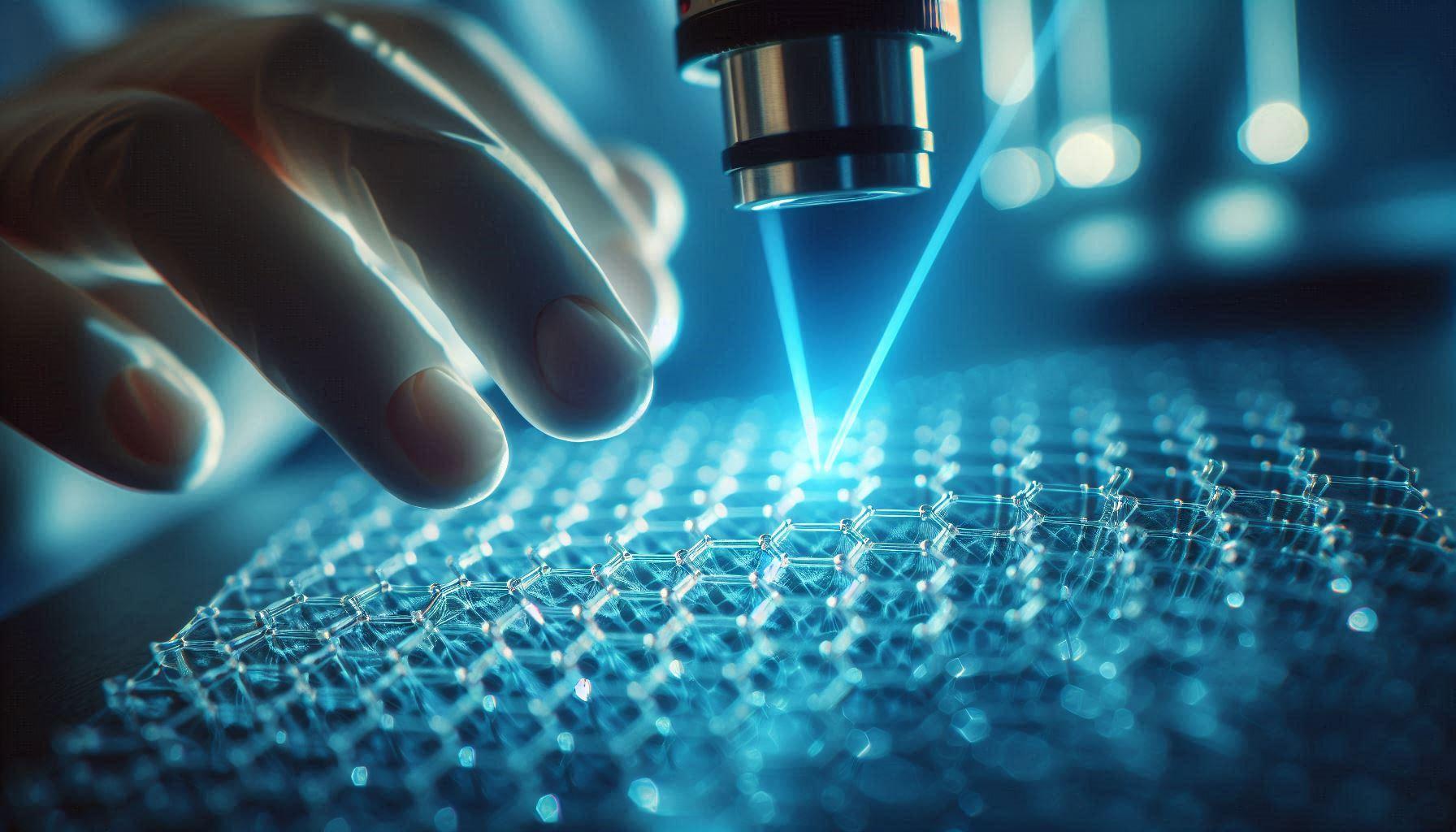
Low dimensional materials and the unique structures built from them has a variety of new exotic properties beyond traditional materials. We hope to produce low dimensional materials and their artificial structures in a sizable and controllable way.
Our ultimate goal is to use these materials to provide novel platforms for next-generation information processing, light processing, and quantum devices. In order to do that, we need to unravel their static and dynamical electronic, magnetic and photonic properties, using the cutting edge characterization techniques including optical and photoemission spectroscopy. We are an experimental material / physical chemistry group. Welcome to join us!
Production of macroscopic 2D structures
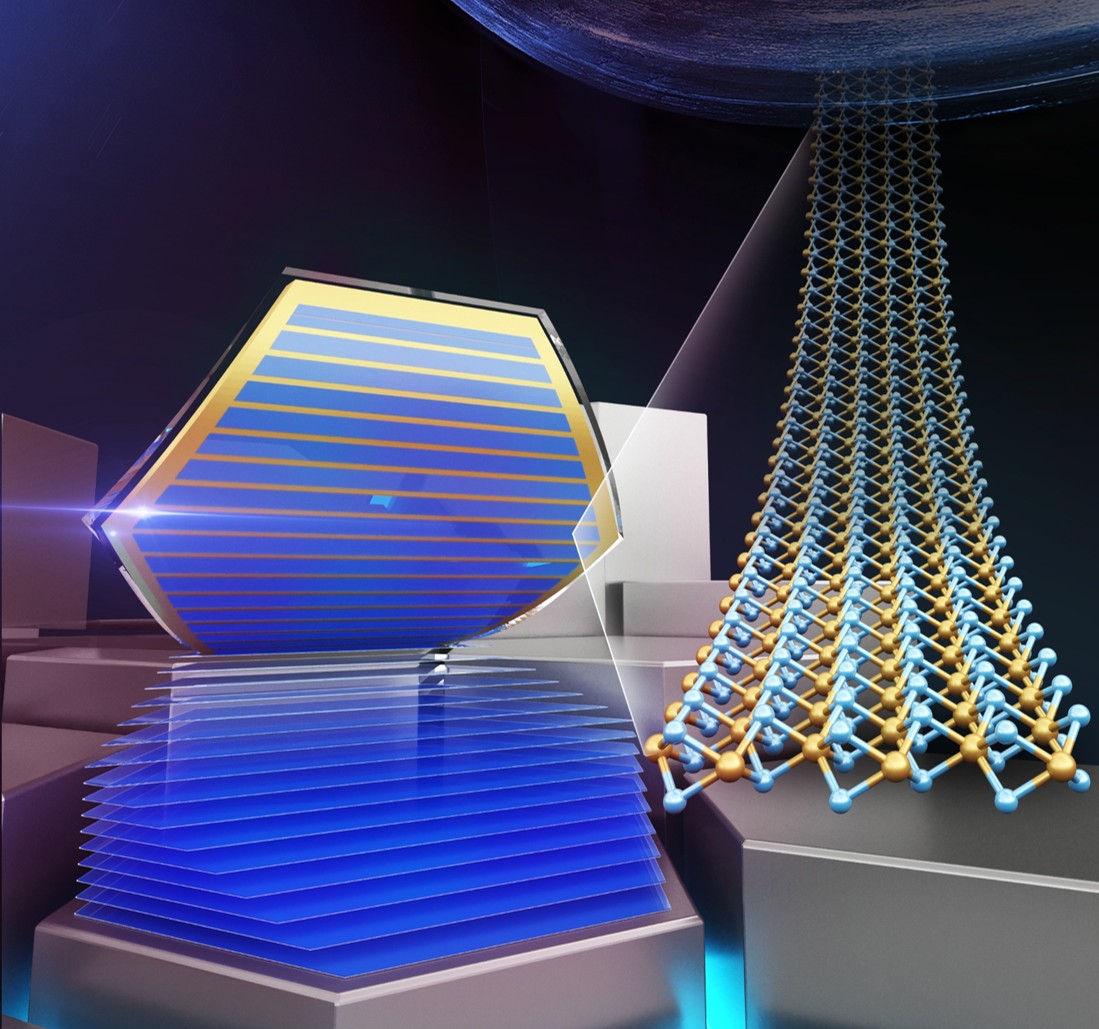
2D monolayers and few-layer flakes with atomic-scale thickness exhibit tunable electronic properties and strong light-matter interactions, making them ideal platforms for realizing high-efficiency transport, ultrafast optical tuning, and novel quantum phases for next-generation information processing and optoelectronic technologies. However, their advancement has been fundamentally constrained by challenges in material availability and quality.
We developed metal-assisted exfoliation techniques producing a broad range of high-quality single-crystal 2D flakes with macroscopic-scale dimensions, near-unity yield, and tunable thickness from monolayers to few-layers.
Light-induced dynamics in low dimensional artificial lattices
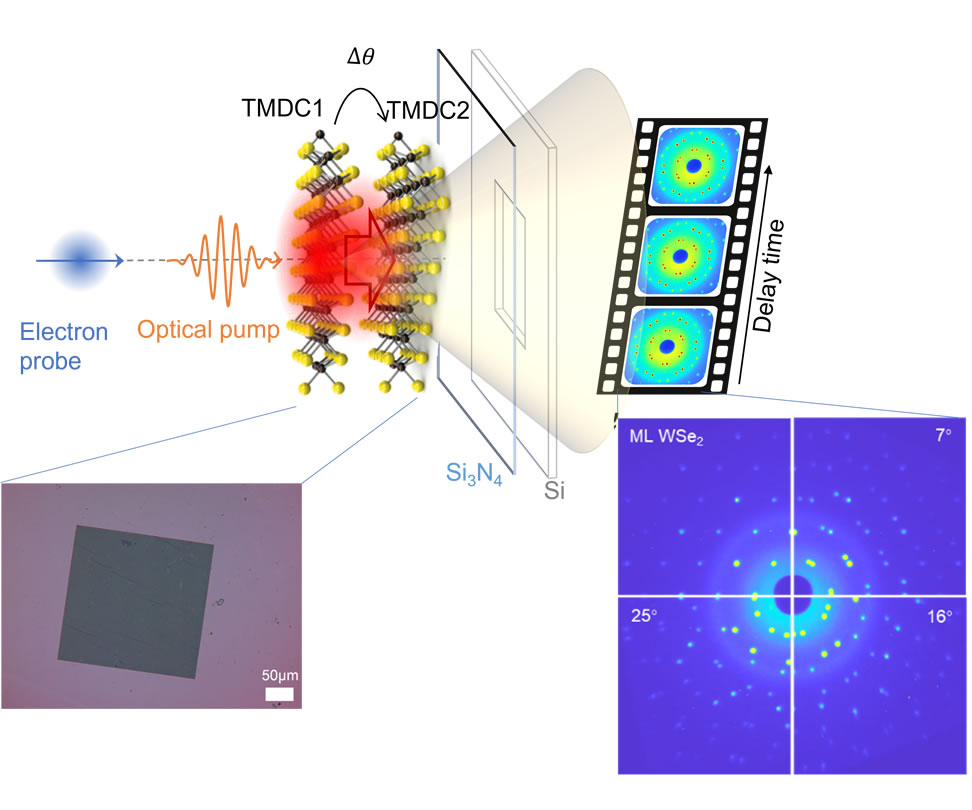
The coupling between electronic and lattice (vibrational) degrees of freedom plays a critical role in the carrier dynamics, interfacial thermal transport, and the emergence of strongly correlated phases in quantum materials. We aim to harness and control these complex vibronic couplings to achieve ultrafast manipulation of quantum phenomena across multiple levels of spatial confinements.
Lightwave manipulation with low dimensional structures
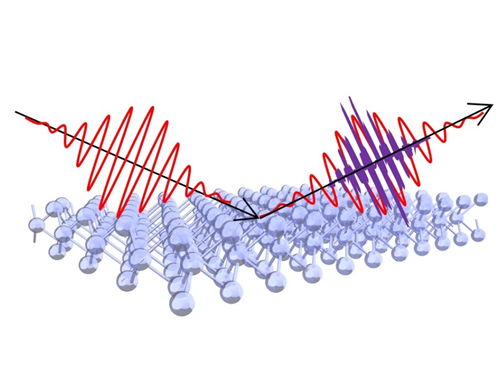
2D TMDC monolayers demonstrate strong excitonic absorption and nonlinear optical responses, making them ideal platforms for radiative engineering in optical devices.
The strong nonlinear optical response and atomically thin structure of 2D materials make them ideal platforms for broad frequency conversion and for exploring strong field induced phenomena with ultrafast optical pulses.